
What is OSI Model?
The OSI Model is a logical and conceptual model that defines network communication used by systems open to interconnection and communication with other systems. The Open System Interconnection (OSI Model) also defines a logical network and effectively describes computer packet transfer by using various layers of protocols.
Characteristics of OSI Model
Here are some important characteristics of the OSI model:
- A layer should only be created where the definite levels of abstraction are needed.
- The function of each layer should be selected as per the internationally standardized protocols.
- The number of layers should be large so that separate functions should not be put in the same layer. At the same time, it should be small enough so that architecture doesn’t become very complicated.
- In the OSI model, each layer relies on the next lower layer to perform primitive functions. Every level should able to provide services to the next higher layer
- Changes made in one layer should not need changes in other lavers.
Why of OSI Model?
- Helps you to understand communication over a network
- Troubleshooting is easier by separating functions into different network layers.
- Helps you to understand new technologies as they are developed.
- Allows you to compare primary functional relationships on various network layers.
History of OSI Model
Here are essential landmarks from the history of OSI model:
- In the late 1970s, the ISO conducted a program to develop general standards and methods of networking.
- In 1973, an Experimental Packet Switched System in the UK identified the requirement for defining the higher-level protocols.
- In the year 1983, OSI model was initially intended to be a detailed specification of actual interfaces.
- In 1984, the OSI architecture was formally adopted by ISO as an international standard
7 Layers of the OSI Model
OSI model is a layered server architecture system in which each layer is defined according to a specific function to perform. All these seven layers work collaboratively to transmit the data from one layer to another.
- The Upper Layers: It deals with application issues and mostly implemented only in software. The highest is closest to the end system user. In this layer, communication from one end-user to another begins by using the interaction between the application layer. It will process all the way to end-user.
- The Lower Layers: These layers handle activities related to data transport. The physical layer and datalink layers also implemented in software and hardware.
Upper and Lower layers further divide network architecture into seven different layers as below
- Application
- Presentation
- Session
- Transport
- Network, Data-link
- Physical layers
Physical Layer
The physical layer helps you to define the electrical and physical specifications of the data connection. This level establishes the relationship between a device and a physical transmission medium. The physical layer is not concerned with protocols or other such higher-layer items. One example of a technology that operates at the physical layer in telecommunications is PRI (Primary Rate Interface). To learn more about PRI and how it works, you can visit this informative article.
Examples of hardware in the physical layer are network adapters, ethernet, repeaters, networking hubs, etc.
Data Link Layer
Data link layer corrects errors which can occur at the physical layer. The layer allows you to define the protocol to establish and terminates a connection between two connected network devices.
It is IP address understandable layer, which helps you to define logical addressing so that any endpoint should be identified.
The layer also helps you implement routing of packets through a network. It helps you to define the best path, which allows you to take data from the source to the destination.
The data link layer is subdivided into two types of sublayers:
- Media Access Control (MAC) layer- It is responsible for controlling how device in a network gain access to medium and permits to transmit data.
- Logical link control layer- This layer is responsible for identity and encapsulating network-layer protocols and allows you to find the error.
Important Functions of Datalink Layer
- Framing which divides the data from Network layer into frames.
- Allows you to add header to the frame to define the physical address of the source and the destination machine
- Adds Logical addresses of the sender and receivers
- It is also responsible for the sourcing process to the destination process delivery of the entire message.
- It also offers a system for error control in which it detects retransmits damage or lost frames.
- Datalink layer also provides a mechanism to transmit data over independent networks which are linked together.
Transport Layer
The transport layer builds on the network layer to provide data transport from a process on a source machine to a process on a destination machine. It is hosted using single or multiple networks, and also maintains the quality of service functions.
It determines how much data should be sent where and at what rate. This layer builds on the message which are received from the application layer. It helps ensure that data units are delivered error-free and in sequence.
Transport layer helps you to control the reliability of a link through flow control, error control, and segmentation or desegmentation.
The transport layer also offers an acknowledgment of the successful data transmission and sends the next data in case no errors occurred. TCP is the best-known example of the transport layer.
Important functions of Transport Layers
- It divides the message received from the session layer into segments and numbers them to make a sequence.
- Transport layer makes sure that the message is delivered to the correct process on the destination machine.
- It also makes sure that the entire message arrives without any error else it should be retransmitted.
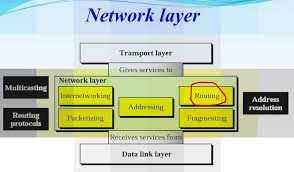
Network Layer
The network layer provides the functional and procedural means of transferring variable length data sequences from one node to another connected in “different networks”.
Message delivery at the network layer does not give any guaranteed to be reliable network layer protocol.
Layer-management protocols that belong to the network layer are:
- routing protocols
- multicast group management
- network-layer address assignment.
Session Layer
Session Layer controls the dialogues between computers. It helps you to establish starting and terminating the connections between the local and remote application.
This layer request for a logical connection which should be established on end user’s requirement. This layer handles all the important log-on or password validation.
Session layer offers services like dialog discipline, which can be duplex or half-duplex. It is mostly implemented in application environments that use remote procedure calls.