
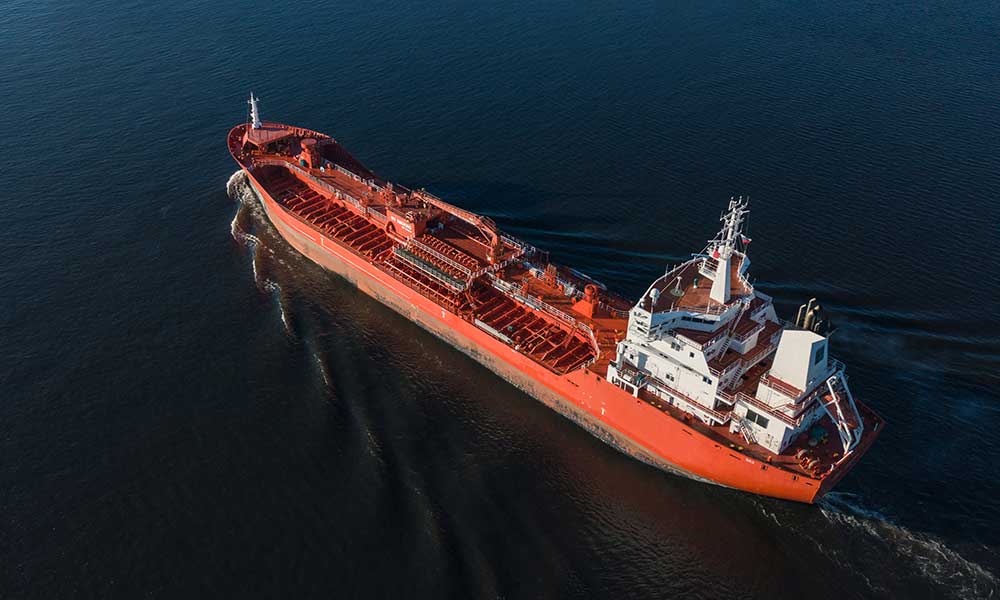
Only 88% of seafarers have internet access at sea Even those who do face limits and high costs. This lack of reliable internet affects more than personal calls or social media browsing. It impacts crucial marine operations.
And while internet solutions for smaller, personal use are available, getting reliable internet access becomes a more significant challenge for enterprise-scale fleets, where larger ships and more people are involved.
This post will examine why dependable internet is essential at sea. We’ll also discuss specific challenges and how Galaxy Broadband solves them with advanced technology.
Key Takeaways
- Connectivity at sea is not a luxury but necessary for crew well-being and effective maritime operations.
- Issues like low bandwidth and unreliable connections pose operational inefficiencies and safety risks.
- From cargo ships missing fuel-efficient routes to research vessels losing vital data, the stakes of poor connectivity are high.
- Low Earth Orbit (LEO) satellite services offer potential solutions to many challenges, providing high-speed and reliable connectivity.
- Modern connectivity solutions also include enhanced security features and are built to adapt to changing operational needs.
- Galaxy Broadband provides reliable, tailored LEO solution for marine operations.
Modern Marine Operations and the Internet Factor
The stakes were high when LeeWay Marine, a Canadian maritime company, struggled with limited internet connectivity. It concerns crew morale, real-time data collection, and effective communication with land-based operations.
They confronted a reality that many in the maritime industry face today: the internet is not a luxury at sea but a critical necessity.
Crew Morale and Family Connection
Having internet access influences not just comfort but also employment decisions for crew members. An overwhelming.92% of seafarers weigh internet availability when choosing their workplace Even more telling, over 75% want to stay connected to the outside world at all times when at sea.
Operational Communication
Continuous contact with land-based facilities is not optional; it’s crucial. A dependable connection provides more than just a channel for messages. It supplies real-time navigation data, cargo tracking, and weather updates, which are fundamental for a ship’s safe and efficient operation.
The Need for Real-Time Data
Traditional methods like mailing hard drives for data review don’t cut it anymore. Many maritime tasks, like hydrographic surveys, require immediate data access. In a world where 95% of seafarers believe connectivity positivity impacts onboard safety, real-time data becomes necessary.
Addressing the Challenge of Internet Access
LeeWay Marine found itself at the intersection of two pressing challenges.
First, the crew increasingly viewed high-speed internet as a standard employment feature. They wanted to FaceTime families, scroll through social media, and stay connected with the world.
Second, clients, especially government organizations, wanted real-time access to data for specialized projects.
To tackle this, LeeWay Marine adopted a nuanced approach. They implemented a voucher system controlled by a Sophos firewall to allocate 40GB of internet bandwidth per crew member. This carefully managed the bridge between operational efficiency and crew satisfaction.
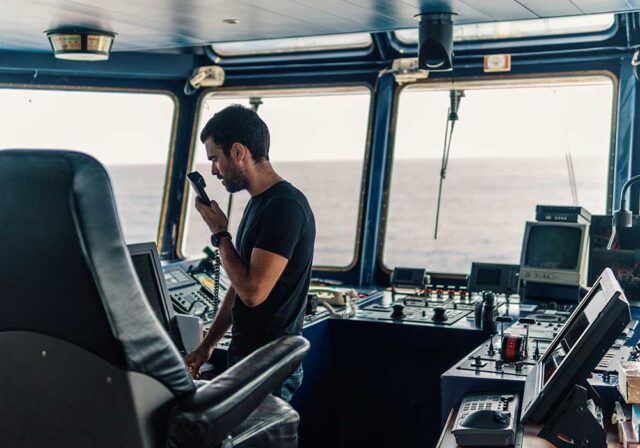
The Dual Role of Internet Connectivity
The voucher system worked, but it revealed a deep dependence on internet connectivity. During the initial phases of implementation, LeeWay worked closely with their crew to better understand how to manage their data usage. This reliance was not merely for leisure; it was also for work.
Autonomous Vehicles and Real-Time Data
LeeWay Marine’s approach to connectivity takes on additional significance when considering its advanced projects.
They are working with global partners to tackle some of the most profound challenges related to autonomous systems. Real-time data and connectivity are the key enablers of this development.
Traditional data-sharing methods like mailing hard drives are no longer sufficient for special projects involving government organizations and private sector clients. These clients demand real-time access to information.
LeeWay Marine has stepped up to this challenge. As Greg Veinott, VP of Business Operations & Programs, put it, “Having reliable, high-speed, low latency internet through Galaxy Broadband’s LEO satellite service allows us to be more competitive in the marketplace and ensures our clients can effectively manage their operations remotely.”
Challenges at Sea: The 24/7 Need for Internet in Modern Maritime Operations
We mentioned the crucial role of reliable internet connectivity in preserving crew morale and empowering critical technology-based solutions, but marine businesses face more challenges. These obstacles can have wide-ranging consequences, from operational inefficiency to safety risks.
Low Bandwidth
Low bandwidth is a persistent issue on the open sea. Essential tasks like monitoring fuel consumption, assessing performance, and receiving real-time weather updates demand a reliable, high-speed connection.
Imagine a cargo ship in the Atlantic, relying on real-time data to optimize its fuel consumption. Low bandwidth could cause delays in data transmission, making the ship miss the optimal route and thus burn more fuel.
Traditional maritime networks often can’t meet these requirements. As digital tools become standard for enhancing operational efficiency, the gap between need and availability widens.
Unreliability
Navigating through remote regions exacerbates connectivity challenges. Vessels often contend with unstable connections, service lapses, and limited coverage.
Consider a research vessel in the Arctic Circle, studying climate change effects. Losing connectivity in such remote locations can halt data uploads to onshore bases, potentially endangering long-term research goals. Similarly, cruise ships in exotic but remote locations can lose the ability to update passengers on real-time weather conditions, which poses a safety risk during sudden storms.
It’s not just about staying online; it’s about the operational and safety risks of losing a connection at a critical moment.
Complicated Setup
The hardware requirements for older maritime connectivity solutions are another hurdle.
Oil rigs are a prime example of connectivity setups being a logistical burden. Traditional solutions involving cranes and other heavy machinery require multiple days to set up and calibrate. This complex setup takes away from the rig’s primary function—extracting oil—and costs the company valuable time and money.